
Searching the Gainesville Court Docket
Each Gainesville record lives with the court that made it. City citations go through the city channel. County-level filings need the Hall portal or the right county clerk. A docket entry may list an event even when the underlying image stays out of public view. Check the court name printed on your citation, summons, or order. A Gainesville Municipal Court ticket stays on the city route. Hall Superior and State cases run through Hall WebCaseManagement. Magistrate civil filings go through Georgia Magistrate Records. Probate has its own portal. What if a new city citation never appears online? Call Gainesville Municipal Court at 770-531-2668. Do not guess that the case moved to another court.
- Read the issuing court and citation or case number.
- Use Gainesville's municipal route for city citations or PublicView for Hall Superior and State cases.
- Open the matching docket and compare the court, filing date, and status.
- Read the newest setting against the citation, summons, or order.
- Call or visit the maintaining clerk when the result is absent, restricted, or unclear.
Gainesville Court Docket Counters Downtown
Downtown Gainesville packs three buildings into a few blocks. Each one holds a different slice of the court record. The Hall courthouse sits at 225 Green Street SE. The Annex is at 116 Spring Street. The federal courthouse sits at 121 Spring Street. Superior and State public terminals live in the Hall Clerk lobby. Probate and Juvenile dockets wait at the Annex. Federal cases go through the federal clerks and PACER. So a Gainesville address alone tells you nothing about which system holds the file.
The municipal counter is in a separate spot. It sits at the Public Safety Complex, 701 Queen City Parkway SW. It opens Monday through Friday, 8:00 a.m. to 5:00 p.m. Bring your citation and a photo ID for a city matter. For a Hall case, bring the case number. Say whether it belongs to Superior or State Court. That small step lets staff pull an existing record instead of running a broad report.
Gainesville Court Docket Public Terminals
Need an image the remote system will not show? The Hall Clerk keeps public computer terminals in the courthouse lobby during open hours. A terminal is a convenience, not a loophole. Sealing orders and confidentiality rules still apply at the screen. Bring the court and case number if you have them. And remember that Gainesville municipal records stay with the city court. The county terminals sit in Gainesville too, but they do not hold city files.
Hall's 2022 mandatory civil e-filing notice promised free public computer access. It also waived a nominal e-access charge at the terminal. Ask the Clerk about current pricing before ordering images. Terminal access is also distinct from PeachCourt filing access. It never unlocks confidential Juvenile Court or treatment-program records.
Gainesville Municipal Court Dockets
Gainesville Municipal Court takes misdemeanor traffic citations filed into city court plus Gainesville code violations. A Hall State Court citation does not land here just because the stop happened inside the city. Read the citation's court heading, agency, and appearance instructions first. They set your search route.
The city offers online payment through Government Window. An automated phone option, mail by check or money order, and payment in person also work. A service fee may apply. One caution matters: payment counts as a guilty plea. It is never proof that appearance is optional. Follow the citation and ask the municipal clerk whether the matter requires court.
Gainesville Court Docket in PublicView
Hall WebCaseManagement, reached through PublicView, splits its docket search into Civil Search and Criminal Search. Civil fields cover case number, party, CSE number, filing dates, and category. Criminal fields add name, alias, and citation, plus the choice of Superior or State Court. Click the plus control beside a result to open its docket event list.
A full result can show case metadata and category. It may also list filed information, status, judge details, docket lines, and controls for available images. An event with no image still records real activity in the case. What about a blank screen? A no-result answer can mean the wrong court or an older, unindexed record. It could also be a spelling variation, delay, or a lawful restriction. Confirm with the Hall Clerk rather than reading silence as proof that no case exists.
Finding Gainesville Court Dates
Begin with the freshest paper you have. The newest citation, summons, notice, or court order carries the date, time, and place of your hearing. For a case in Hall Superior or State Court, open the PublicView docket. Scan it for the latest setting. Gainesville Municipal Court works differently. When the city route does not clearly confirm a setting, call 770-531-2668 with your citation in hand.
One caution about calendars. The Hall civic calendar is not a court docket. NEJC lists recurring remote-hearing windows and courtroom streams. Those are public access routes, not personalized case calendars. A missing stream does not cancel a hearing. Weather and closure notices can change a date before the docket catches up. So check the current NEJC notice and confirm with the assigned clerk.
| Date | Read the latest value shown in the official docket or notice and confirm changes with the clerk. |
|---|---|
| Time | Read the latest value shown in the official docket or notice and confirm changes with the clerk. |
| Courtroom | Read the latest value shown in the official docket or notice and confirm changes with the clerk. |
| Judge | Read the latest value shown in the official docket or notice and confirm changes with the clerk. |
| Setting Type | Read the latest value shown in the official docket or notice and confirm changes with the clerk. |
Gainesville Municipal Court Source
For the city court itself, the official Gainesville Municipal Court page identifies the city route: the Public Safety Complex at 701 Queen City Parkway SW.
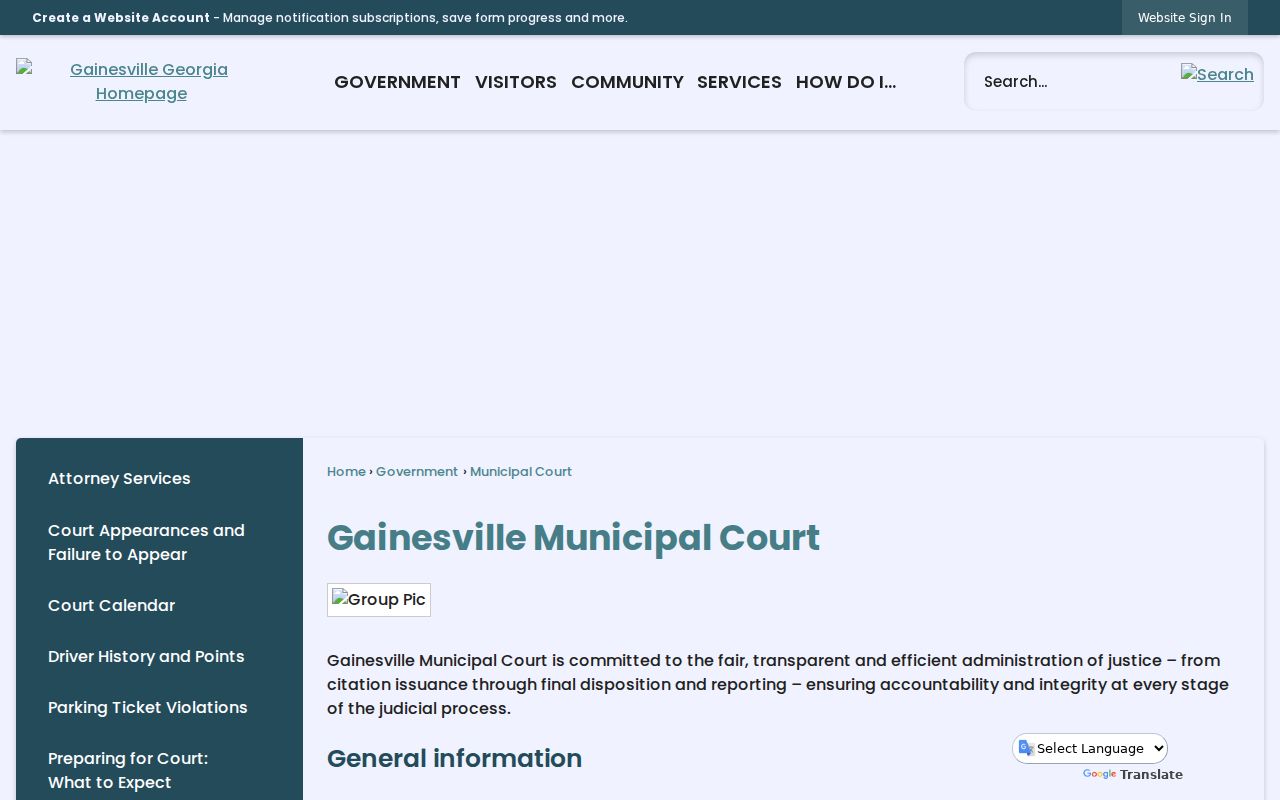
City traffic tickets and code violations in Gainesville belong to one office. The municipal clerk keeps those files. Hall State Court handles its own citations on a separate docket. The two never swap work. When a Gainesville citation seems to vanish, that split is usually the reason.
Call the municipal clerk first. The city can check a municipal traffic or code case. It can also explain how its public record is released. The Hall Clerk cannot certify a city disposition it does not hold. A Government Window payment page is the wrong tool for a felony, a State Court misdemeanor, a Magistrate claim, a Probate hearing, or a Juvenile matter.
Gainesville Traffic Ticket Dockets
Traffic and code cases stay in Gainesville Municipal Court. Hall State Court runs its own traffic and misdemeanor docket under its own case numbers. So read the issuing court before you pay anything through a vendor. A Gainesville address proves nothing about which docket holds the case. The same goes for a run-in with Gainesville police or a downtown location.
If the citation qualifies as municipal, Government Window may display the amount. The city's other published payment channels may show it too. Save the transaction record and citation number. A payment screen is not a certified disposition, and it never waives a mandatory appearance. For proof of the court result, ask Gainesville Municipal Court. Request the city docket or final disposition.
Gainesville Federal Court Docket Boundary
Federal cases live somewhere else entirely. Civil, criminal, and bankruptcy filings never touch Gainesville Municipal Court or Hall WebCaseManagement. The Northern District runs on PACER and CM/ECF. Bankruptcy keeps its own Gainesville intake counter. The official Bankruptcy Court Gainesville page maps out that federal route.
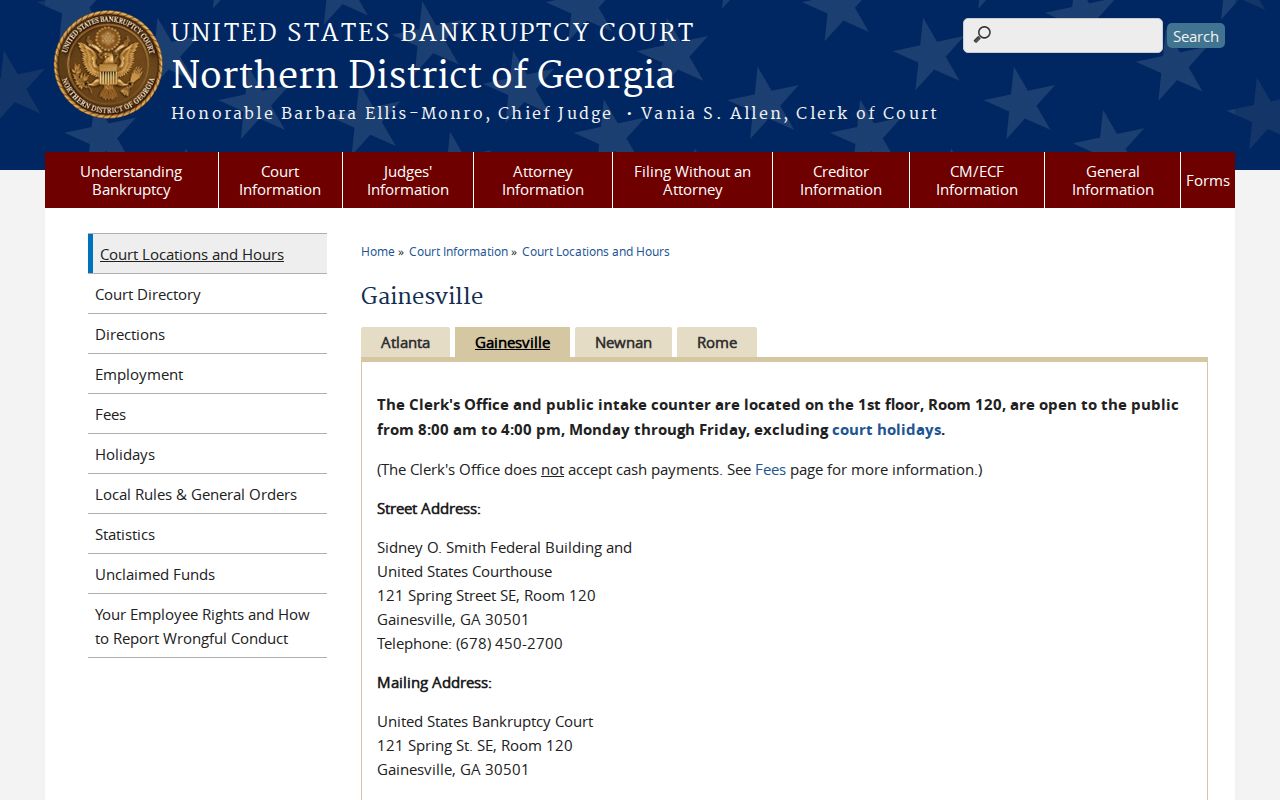
The federal clerk and its record system stand fully apart. The Northern District's Gainesville Division and the bankruptcy court follow federal filing, fee, and confidentiality rules. None of those rules are shared by a county court. PACER requires an account for electronic access.
Case numbers do not travel between systems. A Hall or municipal number gets you nowhere there. A federal number is useless in PublicView. The Spring Street buildings sit close together, which makes the two systems look linked. Their clerks and dockets stay independent.
How Gainesville Cases Move Up
A Gainesville Municipal Court case can finish in the city court or climb to a higher one, and the record shows the procedure used. County felonies follow a different track. Magistrate may handle warrant or preliminary work, but Superior Court keeps the felony docket. State Court takes misdemeanors and non-equity civil cases.
Docket flow: Gainesville Municipal Court › Hall County Courts › Hall County Superior Court and Hall County State Court
Every transfer or appeal draws a line in the record. Keep the city citation, the transfer notice, and the new county case number in one place. Once Hall Superior or State Court has a filed case, search PublicView. Then ask the Hall Clerk for the documents. Federal cases next door sit outside this flow. They answer only to PACER or the federal clerk.
Not every higher-level Gainesville matter follows the same path. Jurisdiction and the filed orders decide. Follow each new case number as the record moves. Track its custodian too. Then get the final document from the court that entered it.
Gainesville Court Docket Copies
A docket entry lists events. It is not always the filed paper itself. Ask Gainesville Municipal Court for a city disposition. For a Superior or State Court document, ask the Hall Clerk division that holds the record. Give the court, the case number, the party, and the exact item. Plain copy or certified copy? Ask which you need.
Hall's court divisions each keep different categories of records. A narrow request saves everyone time. Say whether you want a docket register, a filed pleading, an order, or a judgment. The same goes for a disposition or a certified copy. Try an electronic copy first if that works. Get a fee estimate for research or certification. Probate, Juvenile, municipal, and federal custodians answer only for their own files.
Timelines follow a published county process. Hall says readily available public records may be produced within three business days when possible. Anything needing research gets an estimated cost and completion date. The first fifteen minutes of staff time are free. After that, the lowest qualified employee rate can apply. Court copy and certification charges may be separate. Gainesville Municipal Court can quote its own current cost for a municipal disposition.
Access to Gainesville Court Records
Access depends on the record and who holds it. Georgia court rules lean toward openness. But a statute, a procedure, or a court order can close a file or image. Juvenile cases, sealed domestic filings, protective-order information, treatment records, and protected identifiers all need special handling. A docket line or search field that exposes private identifiers does not license you to repeat them.
Hall routes court requests to the proper court department rather than its general county NextRequest queue. Name the court, the record, the case number if known. Add a date range and your preferred format. If something is withheld or redacted, ask the custodian for the statute or judicial order behind it. Gainesville Municipal Court remains the source for its own public city dispositions.
The Gainesville courthouse cluster also hosts specialty and support programs. Their public descriptions do not open participant records. Health and substance-use confidentiality rules can shield accountability-court treatment information. Juvenile access is far narrower than adult access. A portal may show a public case event. It may still withhold the exhibit or the personal identifiers attached to it. Trust the public docket for the facts it states, and nothing more.
Key Rules:
Georgia Open Records Act - sets procedures for inspecting and copying public records while preserving lawful restrictions.
Georgia Code § 50-18-71 - sets procedures for inspecting and copying public records while preserving lawful restrictions.
Georgia Code § 50-18-71 - sets procedures for inspecting and copying public records while preserving lawful restrictions.