
Searching the Hall County Court Docket
Start your Hall County court docket search at the official Hall County Online Docket. The site splits Superior and State Court access from a participating Magistrate civil search. For Superior and State matters, the public enters WebCaseManagement as PublicView. No password is needed for that entry. Civil and criminal searches run on different fields. So know up front whether the matter is civil, domestic, felony, misdemeanor, or traffic.
A case number is the cleanest way in. A party name can pull broad results. The criminal search also lets you filter by name, alias, citation, court, and filed date. On the civil side, options cover party name, CSE number, filing dates, and case categories. Hall County publishes no single case-number pattern. So copy the number exactly as it appears on a notice or filing. When a result comes back blank, the cause could be the wrong court, an indexing gap, or restricted access.
- Open the Hall docket directory and choose the court route that matches the case.
- Enter the exact case number, or use a narrow party-name and date search.
- Check the court, parties, filing date, and category before relying on a match.
- Select the plus control beside the case number to expand docket entries.
- Confirm critical settings or request a certified copy from the proper clerk.
Hall Online Docket Search Fields
Hall County's civil and criminal screens are not interchangeable. Looking at the field set tells you which search you have open. Enter only the least personal information needed, especially on a shared computer.
| Search | Useful Fields | Scope |
|---|---|---|
| Civil | Case number, party, CSE number, filed dates | Domestic, Superior civil, child support, State civil, habeas |
| Criminal | Case number, name, alias, citation, filed dates | Superior and State Court cases |
| Magistrate civil | County, party, file type, dates, disposition | Participating online civil filings |
The public result tells users to expand the docket with a plus sign. An entry can stay visible even when its document images are restricted. The docket does not display image-cart pricing, so confirm current costs before ordering.
Inside a Hall County Court Docket
A docket is an event index, not always the whole case file. Parties, court, case category, filings, hearing settings, and disposition may all show up there. One caveat applies here. An entry can name a motion or order while the document image itself stays unavailable. Read the heading data first. Then follow the entries in date order. A disposition describes the recorded outcome. It should never be guessed from an earlier charge, claim, or setting.
| Case Number | The court-assigned identifier. Preserve its exact punctuation and spacing. |
|---|---|
| Parties | Names and roles connected with the case; verify identity with case context. |
| Docket Entries / Filings | A dated index of pleadings, notices, orders, returns, and other events. |
| Hearing Settings | Scheduled date, time, and sometimes courtroom or hearing type. |
| Court & Judge | The court level and assigned judicial officer shown by the record. |
| Disposition | The recorded resolution or current outcome, when one has been entered. |
One County, Several Portals
No single search covers every Hall County court docket. Superior and State Court records live in Hall WebCaseManagement. Georgia Magistrate Records handles participating civil Magistrate filings only, not the full criminal side. Georgia Probate Records runs separate estate, will, guardianship, marriage, death, traffic, hearing, and license modules. Juvenile Court offers no public docket search.
City citations add a layer of confusion. Gainesville, Flowery Branch, Oakwood, and Braselton each publish their own court or payment routes. A Hall County address alone does not prove which court holds a ticket. Federal District and Bankruptcy cases sit in federal systems such as PACER. Those sit outside the Georgia county docket.
Best first check: read the court name on the citation, summons, notice, or prior filing before choosing a portal.
The official Hall Online Docket landing page lays out the Superior/State and Magistrate split in plain view.
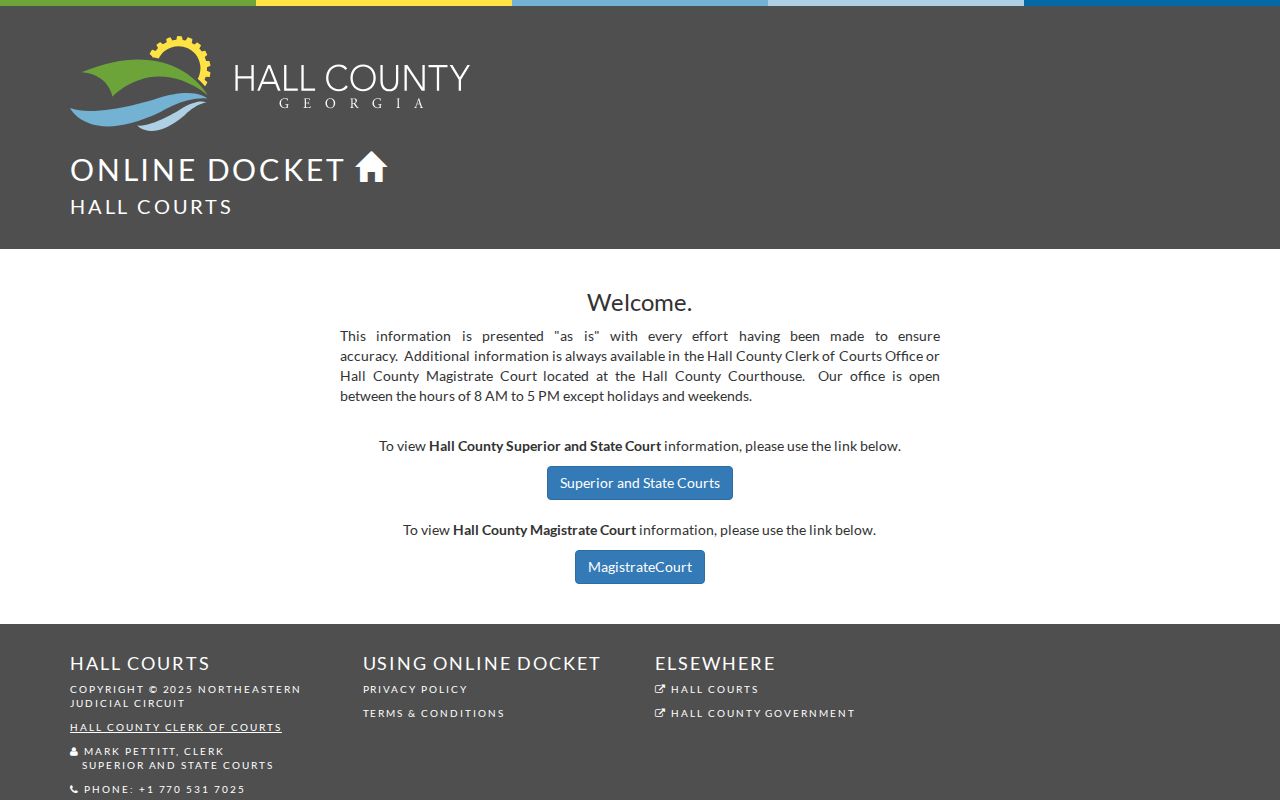
That split is worth pausing on: pick the right court before entering a name or case number.
Courts That Keep Dockets in Hall County
Hall County's courts divide work by jurisdiction. Jurisdiction means legal authority over a case type. Superior Court holds general jurisdiction. It hears felonies, equity, divorce, title disputes, and other matters reserved to it. State Court takes misdemeanors and traffic matters assigned there. It also handles civil cases outside Superior Court's reserved categories. Magistrate, Probate, Juvenile, and the city courts each keep their own records.
| Court | Docket Covers | Where to Search |
|---|---|---|
| Superior Court | Felonies, divorce, equity, title, major civil matters | Hall WebCaseManagement and Clerk |
| State Court | Misdemeanors, assigned traffic, non-equity civil cases | Hall WebCaseManagement and Clerk |
| Magistrate Court | Claims up to $15,000, dispossessory, garnishment, warrants | Magistrate civil search or court office |
| Probate Court | Estates, guardianships, licenses, related proceedings | Georgia Probate Records and Probate Clerk |
| Juvenile Court | Dependency, delinquency, CHINS, termination, guardianship | Juvenile Clerk; access is restricted |
Downtown Gainesville Court Counters
Several record offices sit within a few blocks of each other in downtown Gainesville. Yet they serve different systems. The Hall County Courthouse at 225 Green Street SE houses Superior and State Court services. The Annex at 116 Spring Street handles other functions. These include Probate and Juvenile access. The federal courthouse at 121 Spring Street SE belongs to the Northern District of Georgia. Walking to the nearest building does not put you at the right clerk.
The Hall Court and Judicial Services directory shows courthouse hours, parking, and office routes. Reach the parking deck entrance from Spring Street. Public terminals sit in the Clerk's lobby. They round out the county's mix of online and counter access.
The official Hall Clerk directory lists its divisions. It also gives the contact route behind Superior and State Court records.
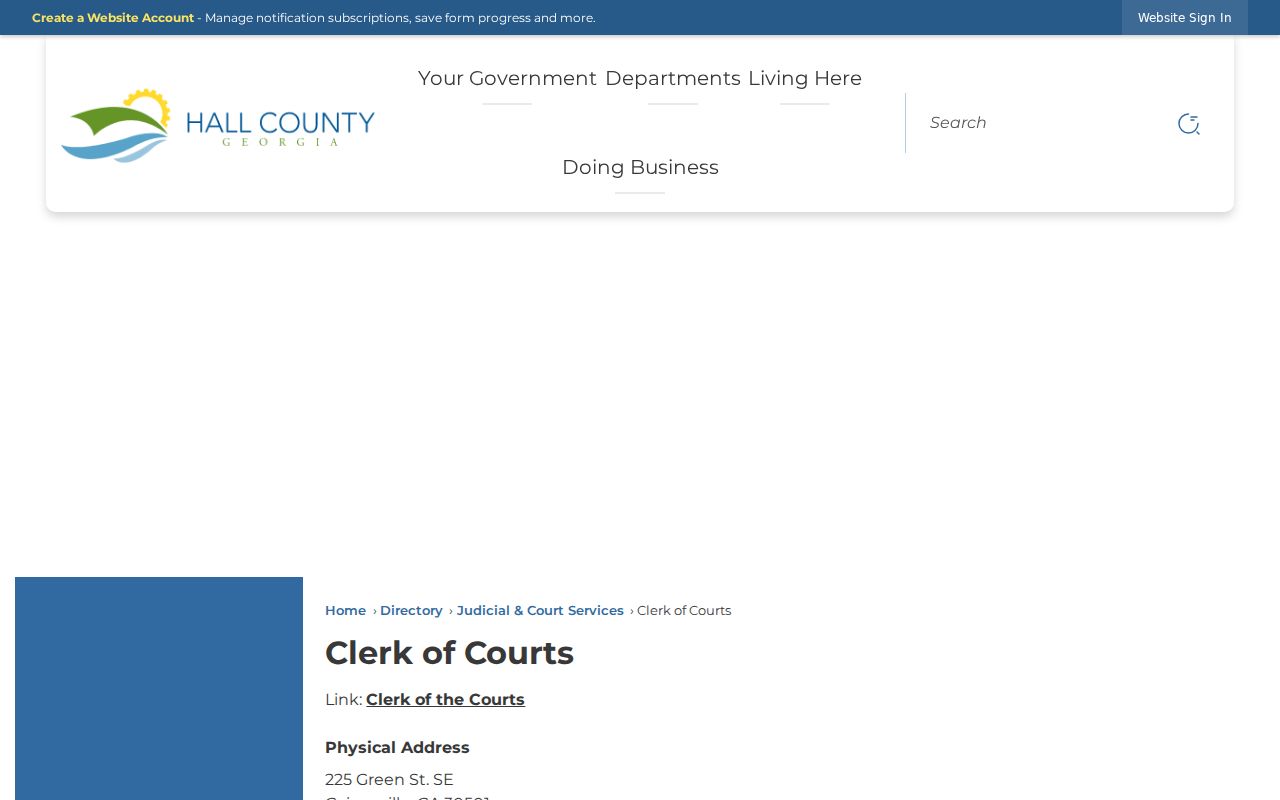
Address a case-file or certified-copy request to the named division. A general county desk may not route it correctly.
How to Find Court Dates and Settings
Begin with the filed notice, citation, or order. Then compare it against the expanded docket entry. A setting may mark an arraignment, motion hearing, trial, calendar call, or another event. A continuance moves a setting; a reset replaces it with a new date. Keep this in mind. The county civic calendar is not a case calendar. Hall's legacy clerk calendar page also tends not to load.
For a full routing walkthrough, see the Hall County court dates page. The Northeastern Judicial Circuit also posts remote proceeding schedules and courtroom livestream links. Those pages are access aids, not proof that a specific setting remains active. Rule 22 bars recording or rebroadcast without approval.
Hall Docket Terms in Context
Short docket labels can shift the meaning of an event. Read each entry alongside its date and the surrounding events before drawing a conclusion.
- Setting
- A scheduled court event, not necessarily a trial.
- Continuance
- An order moving a matter to a later time.
- Disposition
- The recorded outcome or resolution of a claim or charge.
- Nolle prosequi
- A prosecutor’s formal decision not to proceed with a charge at that time.
- Restricted
- An entry or image withheld from the public view under law, rule, or order.
A charge is not a conviction. The same logic applies to civil filings: a filing is not a judgment. Quote the docket's precise label, then check for a later order or disposition.
Public Access to Court Dockets
Georgia court records are generally open unless a statute, court rule, or order limits access. Hall County's open-records process treats court records differently from ordinary county department records. Beginning July 1, 2026, most county requests go through NextRequest, though Hall County Courts are expressly routed to the proper court department instead. Ask for an existing docket, filing, judgment, calendar, or other identifiable record. An office need not create a new report that does not exist.
Key Rules:
O.C.G.A. §50-18-71 supports inspection and copying of public records, subject to lawful exceptions.
Uniform Superior Court Rule 21 governs public court access and judicial limits on access.
Rule 21.6 and O.C.G.A. §9-11-7.1 protect specified personal identifiers from public disclosure.
Restricted Hall County Case Material
Some Hall County case material sits behind tighter limits. The index may list the case number anyway. Juvenile matters, adoptions, sealed domestic filings, protective-order information, treatment records, medical details, and financial identifiers all face extra protection. Magistrate Court also keeps sensitive warrant questions out of the public criminal search. It sends those inquiries to the office instead.
A blank result does not mean the case never existed. The file could be sealed. It could be held by another court, older than the index, or simply outside the provider’s scope. Ask the office holding the record about the basis for restricted access. But leave out birth dates, account numbers, driver-license data, and protected addresses that no one needs.
Docket Records at the Clerk's Office
Mark Pettitt, Clerk of Superior and State Court, runs six divisions. They cover civil, criminal, traffic, jury, real-estate, and records functions. His staff can route a request for a docket sheet, a filed document, or a certified copy. Magistrate and Probate each have their own chief clerks. Juvenile records follow a separate restricted process. A quick call to the right division keeps a records request from landing in the wrong place. That office may never have held the file.
Hall Clerk of Superior and State Court
225 Green Street SE
Gainesville, GA 30501
770-531-7025
Copies, Fees, and Certification
Viewing online, getting an ordinary copy, and getting a certified copy are three different products. Certification means the clerk formally attests that the copy matches the official record. Hall’s Magistrate fee schedule prices regular copies at $0.25. Certified copies cost $3. Records in the 2010 to 2018 access-storage range carry a $10 scanned-copy charge. Other divisions set their own charges.
Fees come from state law. They are non-refundable and may change, according to the general Hall Court Fees page. Always ask the record-holding office for a current estimate. For administrative open-record requests, Hall gives the first fifteen minutes of staff time free. Later labor is billed at the lowest qualified employee’s rate. Standard paper copies run $0.10 per letter or legal page.
| Product | Best Source | What to Confirm |
|---|---|---|
| Docket view | Public portal or terminal | Coverage and image limits |
| Regular copy | Holding clerk division | Page and retrieval cost |
| Certified copy | Issuing clerk | Certification fee and delivery |
A tight request is cheaper and easier to route. Name the court, the case number, and the record type. Include the date range and the format you want. If you do not need certification, ask for an existing electronic record first. Where redaction or research is involved, get a cost estimate first. Get a production date too, before anyone starts work.
Push back politely when access is denied. Ask which statute, court rule, or order supports withholding part of the record. That answer matters. It separates a real access limit from a request that simply reached the wrong office.
Hall E-Filing Is Not Docket Access
PeachCourt became mandatory for most Hall Superior and State civil filings on October 1, 2022. Eligible Magistrate claims, dispossessory documents, and answers go through eFile Georgia. Probate moved petitions and responses to TrueFiling in 2024. Each service carries its own account, transaction, and fee rules.
Filing is not the same as looking things up. PeachCourt does not replace the Hall public case index. A payment vendor never becomes the official record custodian. The 2022 notice described free public computers in the Clerk’s lobby. A nominal e-access add-on was waived at those terminals. That pricing detail has not been reconfirmed for 2026. So ask the Clerk before counting on it.
The Northeastern Judicial Circuit administration page shows the operational structure behind court schedules. It covers case services as well.
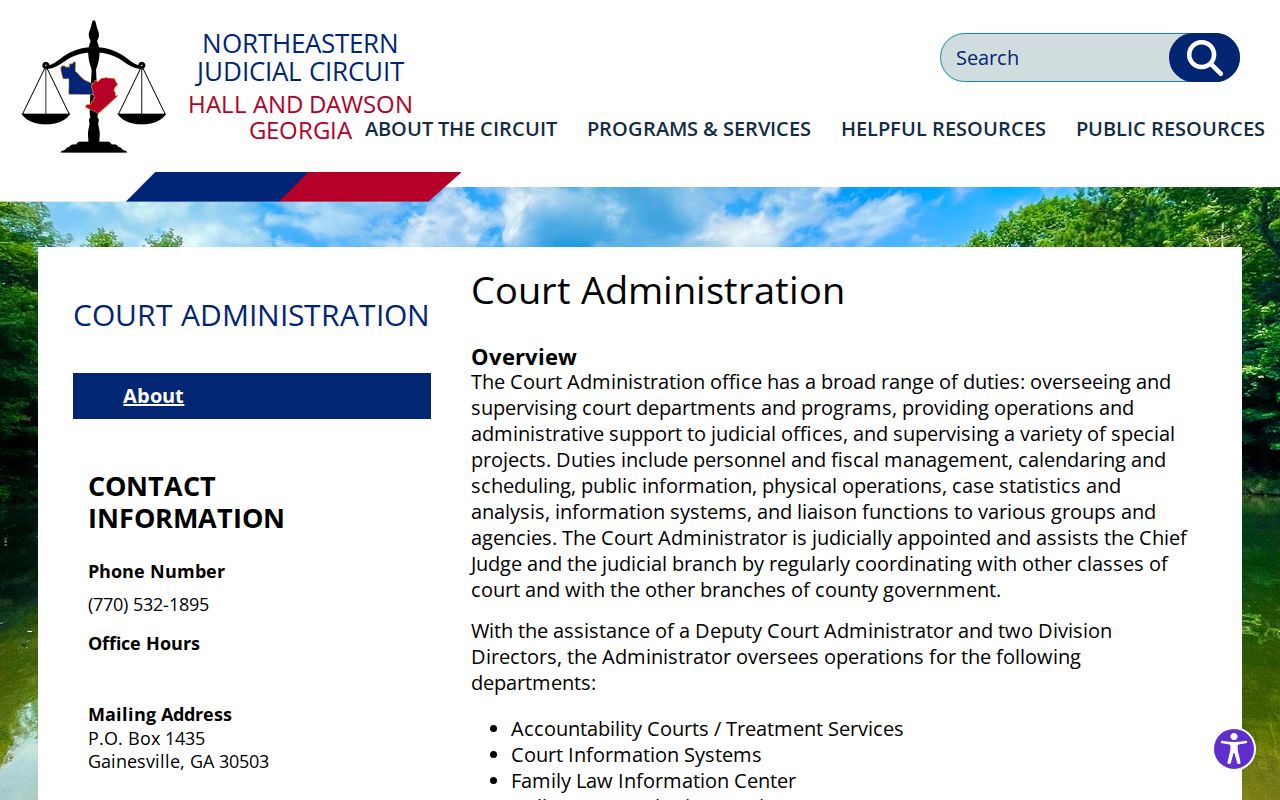
Administration handles operational questions; the clerk remains the source for the filed case record.
Hall’s public-facing technology spans several generations of access. The older hallcourts.net pages keep classic navigation and a public-login design. The newer docket landing page works as a directory. The legacy calendar has shown a database architecture error. That glitch does not make the official link unofficial. It does mean a live case date should come from the current docket, a filed notice, or direct confirmation. Probate, Magistrate, city, and federal systems stay separate. They serve different courts, not because one Hall search has failed.
Current Hall Court Access Changes
When a hearing or courthouse visit is close, official notices matter most. The Northeastern Judicial Circuit news page posts closures, delayed openings, judicial notices, and other updates. Weather notices changed courthouse access in early 2026. A docket can lag behind a building closure. An operational alert covers that right away.
Hall is also studying a judicial-complex expansion funded through SPLOST IX. The county expansion page collects studies, options, presentations, and 2026 town-hall material. Those are planning records, not proof of a final courthouse location. Keep using the current office address until Hall announces an official move.
The NEJC notices and news page is where the circuit posts current court announcements.
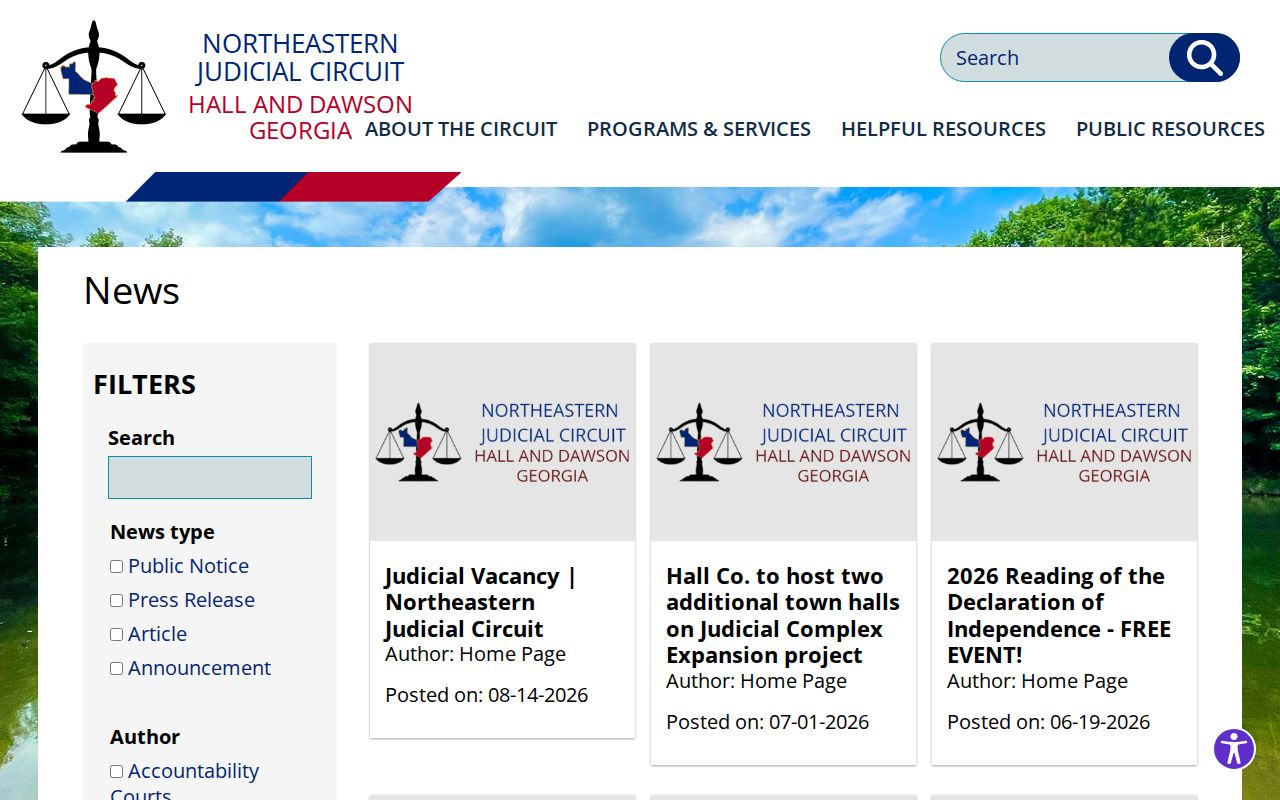
Read the dated notice itself, then confirm any case-specific effect with the assigned court.
Time-sensitive facts deserve extra care. Court personnel, fees, payment vendors, remote-hearing windows, and closure instructions all shift over time. A current official page outranks an older form or FAQ. Hall’s traffic materials, for example, carry differing failure-to-appear fee figures in current and older sources. Resolve that conflict with the Traffic Division rather than quietly picking one amount. The same rule governs docket events. The newest signed order and the clerk’s current record control over an earlier calendar entry.
Hall County Court Dockets by City
Most municipal tickets start in the city that wrote them. Gainesville, Braselton, Flowery Branch, and Oakwood each run their own municipal court route, separate from the Hall Superior and State Court portal. Lula posts no municipal docket or payment portal, so city hall is the best first call. The population figures beside each city describe size only, not court volume. Braselton and Lula also cross county lines, so geography alone cannot tell you who holds the record.
The issuing court field tells you where a case lives. A city police citation may stay in municipal court, a Hall State Court citation runs through the county traffic process, and a transferred jury matter can end up at the county level. Check that field before you pay, request a copy, or drive to a counter. Paying online can count as a guilty plea. Read the court's own instructions before you start the transaction.
Gainesville Docket Search
42,296 · Municipal traffic and code cases; county courts are also based here.
Braselton Docket Search
13,403 · A multi-county town with its own Municipal Court and JusticeONE route.
Flowery Branch Docket Search
9,391 · City court records and eligible ticket payments follow the municipal route.
Oakwood Docket Search
4,822 · Court Services handles traffic and local ordinance matters.
Lula Docket Search
2,822 · Confirm the issuing court through Lula’s official city contact.
Map and Directions to the Hall County Courthouse
Superior and State Court records are kept at the Hall County Courthouse, 225 Green Street SE, in downtown Gainesville. Clerk of Superior and State Court Mark Pettitt's office handles the county's civil, criminal, traffic, jury, and real-estate divisions there, with the courthouse open Monday through Friday, 8:00 a.m. to 5:00 p.m. Superior Court sits on the fourth floor. Probate and Juvenile Courts are in a separate building, the Courthouse Annex at 116 Spring Street SE, on the first and second floors.
Hall Clerk of Superior and State Court
225 Green Street SE
Gainesville, GA 30501
770-531-7025
Monday through Friday, 8:00 a.m. to 5:00 p.m.
The public parking deck is reached from Spring Street, and free public computer terminals sit in the Clerk's lobby during open hours. No official source confirms a specific security-screening policy at Green Street, so call 770-531-7025 to confirm current access before a visit.